
Current Location:Home > Keynote Speakers
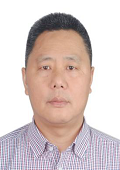
Prof. Elias C. Aifantis is currently an Emeritus Professor of Mechanics at Aristotle University of Thessaloniki/Greece and Michigan Technological University/USA, as well as Mercator fellow at Friedrich-Alexander University/Germany and a Distinguished Professor at Beijing University of Civil Engineering and Architecture/China. Formerly, he has also been a Distinguished Faculty Advisor at King Abdulaziz University/Saudi Arabia, Distinguished Visiting Expert at ITMO University/Russia and Southwest Jiaotong University/China, as well as MegaGrant Director at Togliatti State University /Russia. He has promoted highly interdisciplinary work in mechanics of materials by bringing into the field of solid mechanics ideas from diffusion theory, chemical reactions, and nonlinear physics. He has coined the terms dislocation patterning, material instabilities, gradient plasticity/elasticity, chemo/nanomechanics, and pioneered internal length gradient (ILG) theories in these fields. Currently, he is extending the ILG framework to revisit electromagnetism and Maxwell’s equations, as well as gravitation and Newton’s Law. He has published over 350 articles and received about 13,402 citations with 59 h-index (Scopus); 12,450 citations with 55 h-index (Web of Science); 20,580 citations with 70 h-index (Google Scholar). He is included in the ISI Web of knowledge list of the world’s most highly cited authors in engineering. Dr. Honggui LI, School of Information Engineering, Yangzhou University, China Biography: Honggui LI received his B.S. degree in Electronic Science and Technology from Yangzhou University and his Ph.D. degree in Mechatronics Engineering from Nanjing University of Science and Technology. He is a senior member of the Chinese Institute of Electronics. He was a post-doctoral fellow and visiting scholar at Institut Supérieur d'Électronique de Paris for one year. He is an Associate Professor of Electronic Science and Technology and responsible for postgraduate program of Electronic Science and Technology at Yangzhou University. As a reviewer for some international journals, he is the author of more than 30 refereed journal and conference articles. He is TPC member and session chair of some international conferences. His current research interests include artificial intelligence, deep learning, machine learning, computer vision, and embedded computing. Prof. Dr. Osman Adiguzel, Firat University, Elazig, Turkey Biography: Dr. Osman Adiguzel graduated from Department of Physics, Ankara University, Turkey in 1974 and received PhD- degree from Dicle University, Diyarbakir-Turkey. He studied at Surrey University, Guildford, UK, as a post doctoral research scientist in 1986-1987, and his studies focused on shape memory alloys. He worked as research assistant, 1975-80, at Dicle University and shifted to Firat University in 1980. He became professor in 1996, and he has been retired due to the age limit of 67, following academic life of 45 years. Prof. Wenfeng Wang, School of Electrical and Electronic Engineering, Shanghai Institute of Technology, China Biography: Dr Wenfeng Wang is the editor in chief of International Journal of Electrical and Electronics Engineering (IJEEE) and International journal of Applied Nonlinear Science. He is currently a full professor of School of Electrical and Electronic Engineering, Shanghai Institute of Technology. He is also the director of International Academy of Visual Art and Engineering in London and the JWE Technological Research Center in Shanghai. He has been invited as a tenured professor by IMT Institute in India and the director of Sino-Indian Joint research center of artificial intelligence and robotics. He was selected in 2018 as a key tallent in Ningbo Institute of Materials Technology and Engineering, Chinese Academy of Sciences. He is a reviewer of many SCI journals, including some top journals - Water Research, Science China-Information Sciences, Science of the Total Environment, Environmental Pollution, IEEE Transactions on Automation Science and Engineering and etc. He served as a keynote speaker of AMICR2019, IACICE2020, OAES2020, 3DIT-MSP&DL2020, NAMSP2021 and etc. He is also the scientist in chief of several influential companies (e.g., RealMax, SLAI Lab and etc.). Professor Wang has great will to serve for interested journals and he also knows well about how to develop these journals. His belief is to work at the best for each dream. Prof. Vesna Zeljkovic, Department of Chemistry and Physics, Lincoln University, USA Biography: Prof. Dr. Vesna Zeljkovic's expertise encompasses signal and image processing, developing mathematical models and novel algorithms for the analysis of 2D images that have applications in biomedical engineering and medicine, video surveillance, analysis of complex optical spectra, public health, industrial application, homeland security and national defense. She has published more than 100 scientific papers, a book chapter, she authored two books titled “Video Surveillance Techniques and Technologies,” IGI Global Hershey PA, USA, and “Illumination Independent Moving Object Detection in Image Sequences,” LAP Lambert Academic Publishing GmbH & Co. KG, and also co-authored two books published in biomedical engineering field. Dr. Zeljkovic serves as a reviewer for peer reviewed journals and conference proceedings. Prof. H. Eugene Stanley is William Fairfield Warren Distinguished Professor; Professor of Physics; Professor of Chemistry; Professor of Biomedical Engineering; Professor of Physiology (School of Medicine),Director, Center for Polymer Studies, Department of Physics, Boston University, USA. He is Selected Member of National Academy of Sciences, USA, Foreign Member of Academia Brasileira de Ciencias (Brazilia n Academy of Sciences), Co-Editor of Springer Verlag book series Partially Ordered Systems. Co-Editor-in-Chief (with Dawson, Indekeu, Parisi, and Tsallis): Physica A, 1988–2020. Honorary Editor, 2020–present; Chief Editor, Graduate Texts in Physics, Springer-Verlag, Co-Editor of Cambridgge University Press book series Physics of Society—Econophysics & Sociohysics,2015 – present. Alexander G. Ramm was born in Russia, emigrated to the United States in 1979, and is a U.S. citizen. He is a Professor Emeritus of Mathematics with broad interests in analysis, scattering theory, inverse problems, theoretical physics, engineering, signal estimation, tomography, theoretical numerical analysis, and applied mathematics. He is the author of 708 research papers and 20 research monographs and is the editor of 3 books. He has lectured in many universities throughout the world, gave more than 150 invited and plenary talks at various conferences, and had supervised 11 Ph.D. students. He was a Fulbright Research Professor in Israel and Ukraine, distinguished visiting professor in Mexico and Egypt, Mercator professor in Germany, research professor in France, Spain, Japan, China, Sweden, Italy, Turkey, Australia, and other countries, invited plenary speaker at the 7th PACOM in Africa, won the Khwarizmi international award in 2004, and received many other honors. A. G. Ramm has solved inverse scattering problems with fixed-energy scattering data, with non-over-determined scattering data and has studied scattering problems with under-determined scattering data. He has solved many specific inverse problems and developed new methods in this area. He has also solved the many-body wave scattering problem when the bodies are small particles of arbitrary shapes and used this theory to give a recipe for creating materials with a desired refraction coefficient. These results attracted attention from the scientists working in nanotechnology. He gave formulas for the scattering amplitude for scalar and electro-magnetic waves by small bodies of arbitrary shapes and formulas for the polarizability tensors for such bodies. He gave a complete solution to the Pompeiu problem, proved the Schiffer’s conjecture, and gave first symmetry results in harmonic analysis. He has developed the Dynamical Systems Method (DSM) for solving linear and nonlinear operator equations, especially ill-posed. He developed a random fields estimation theory, proved nonlinear inequalities, and used these for obtaining new results in stability theory. He studied convolution integral equations and inequalities with hyper-singular integrals. Recently, he solved the millennium problem (concerning the Navier–Stokes Problem (NSP)) and proved the paradox in the NSP which shows the contradictory nature of the NSP and the non-existence of its solution. Title: Creating materials with a desired refraction coefficient Dr. Fabrizio Ambrosino Title" Direct and indirect measurement of Thoron gas in air with spectroscopic methods and simulations". Department of Mathematics and Physics,University of Campania "Luigi Vanvitelli",Viale Abramo Lincoln, 5, 81100 Caserta CE, Italy.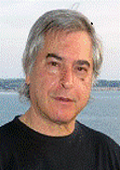
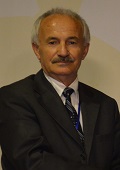
He published over 80 papers in international and national journals; He joined over 120 conferences and symposia in international and national level as Plenary Speaker, Keynote Speaker, Invited speaker, speaker or Poster presenter. He served the program chair or conference chair/co-chair in some of these activities. In particular, he joined in last six years (2014 - 2019) over 60 conferences as Speaker, Keynote Speaker and Conference Co-Chair organized by different companies in different countries.
Additionally, he retired at the end of November 2019, and contributed with Keynote/Plenary Speeches over 60 Virtual/Webinar Conferences, due to the coronavirus outbreak in two year of his retirement, 2020 and 2021.
Dr. Adiguzel served his directorate of Graduate School of Natural and Applied Sciences, Firat University in 1999-2004. He supervised 5 PhD- theses and 3 M. Sc theses. He is also technical committee member of many conferences. He received a certificate which is being awarded to him and his experimental group in recognition of significant contribution of 2 patterns to the Powder Diffraction File – Release 2000. The ICDD (International Centre for Diffraction Data) also appreciates cooperation of his group and interest in Powder Diffraction File.
Scientific fields of Dr. Adiguzel: Shape memory effect and displacive phase transformations in shape memory alloys and other alloys, molecular dynamics simulations, alloy modeling, electron microscopy, electron diffraction, x-ray diffraction and crystallography.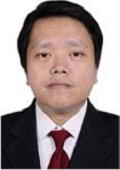



Time Countdown:
DAYS
First Round Submission
Submission Deadline:
December 19th, 2022
 Please submit your full paper to us by email to: icpem2020@163.com
--------------------------------------------------------
 13296635953
--------------------------------------------------------
 easeeditor
--------------------------------------------------------